
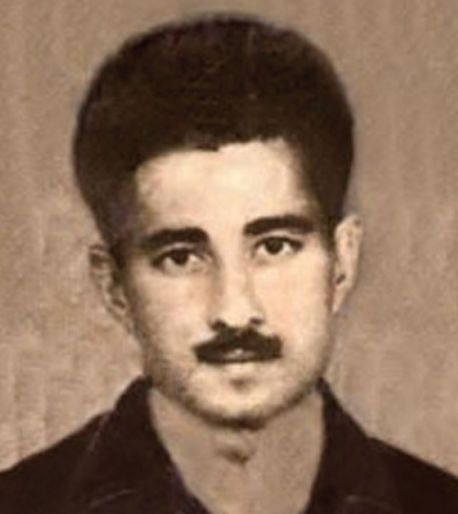
A Revolutionary Who Gave His Life to the Cause of the Working Class
Comrade Hassan Nasir was born on 2 August 1928 in Hyderabad Deccan, into an educated and privileged family belonging to the Muslim aristocracy. His maternal grandfather, Nawab Mohsin-ul-Mulk, was a prominent figure associated with the Aligarh Movement. Despite his privileged family background and opportunities for a comfortable life, Hassan Nasir chose the path of revolutionary politics and dedicated himself to the struggle for social emancipation, equality and the liberation of the working class.
Hassan Nasir became deeply influenced by Marxist ideas, progressive politics and the anti-feudal peasant struggles of the Indian subcontinent, particularly the Telangana peasant movement. These experiences shaped his political outlook and strengthened his conviction that fundamental social transformation could only be achieved through organised struggle against exploitation and oppression.
Hassan Nasir arrived in Pakistan in December 1947 and became associated with the Communist Party of Pakistan (CPP). He soon emerged as an active political and organisational worker, particularly in Karachi, where he worked among industrial workers, progressive political circles and the emerging labour movement. He sought to connect the everyday struggles of workers with the broader objectives of the communist movement.
His organisational abilities and commitment earned him the confidence of the Party leadership. In July 1948, following the arrest of Comrade Jamaluddin Bukhari, Secretary of the Sindh Provincial Organisation of the CPP, the responsibility for safeguarding important Party resources was entrusted to Hassan Nasir. Subsequently, he was inducted into the Party’s Central Committee, reflecting the growing importance of his role in the underground organisation of the Communist Party.
Following the ban on the Communist Party of Pakistan in October 1954, Hassan Nasir was arrested and forcibly deported to India. However, this did not break his political commitment to the communist movement in Pakistan. He returned in 1955 and resumed his political and organisational activities, maintaining his connections with workers and progressive activists.
After the imposition of martial law in October 1958, political repression intensified and communist activists were forced to operate under increasingly difficult conditions. Hassan Nasir continued his underground organisational work, maintaining links with Party workers and the labour movement. His political commitment and organisational activities made him a target of the state security apparatus.
He was eventually arrested in Karachi and transferred to Lahore, where he was detained in the historic Lahore Fort, which had become notorious as a centre of interrogation and torture of political prisoners. During his detention, he was subjected to severe torture. As concern grew over his whereabouts and physical condition, Comrade Major Muhammad Ishaq and renowned lawyer Mian Mahmood Ali Kasuri approached the Lahore High Court to establish his whereabouts and secure his production before the court.
On 22 November 1960, the Lahore High Court ordered the authorities to produce Hassan Nasir before it. Tragically, by then he had already been killed in custody on 13 November 1960. His death in the custody of the state became one of the most tragic episodes in the history of Pakistan’s democratic and communist movements.
Comrade Hassan Nasir’s life represented the triumph of political conviction over personal privilege. He abandoned the prospects of a comfortable life and devoted himself to the cause of workers, peasants and oppressed people. His revolutionary commitment, organisational contribution and ultimate sacrifice established him as one of the most enduring figures in the history of the Communist Party of Pakistan.
His martyrdom remains a powerful symbol of resistance against state repression and authoritarianism. More than six decades later, Comrade Hassan Nasir continues to be remembered with profound respect by the communist movement and progressive forces in Pakistan. His life and sacrifice stand as a lasting testament to revolutionary dedication, ideological steadfastness and the struggle for a society free from exploitation and oppression.