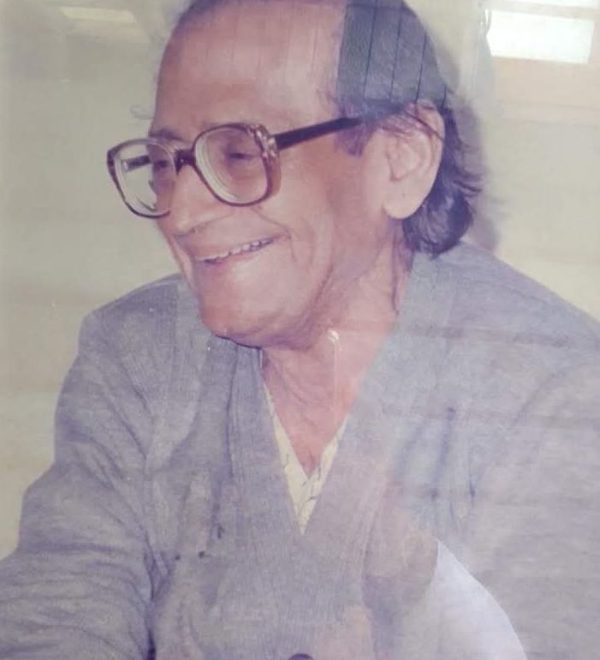
Comrade Imam Ali Nazish, widely known as Nazish Amrohvi, served as General Secretary of the Communist Party of Pakistan (CPP) for 37 years, from the late 1960s until his death. A committed communist and revolutionary poet, he made a significant contribution to the party’s ideological and organisational struggle as well as to progressive Urdu literature.
Born on 4 August 1922 in Uttar Pradesh, India, Imam Ali Nazish migrated to Karachi following the partition of the subcontinent in 1947. He initially became associated with the Progressive Writers’ Association, where he later served as Joint Secretary. His involvement in progressive literary and political activities eventually led him to join the Communist Party of Pakistan.
Following the Rawalpindi Conspiracy Case of 1951, in which several communist leaders, military officers and others were arrested on charges of conspiring to overthrow the government, the Communist Party of Pakistan was forced to operate underground. The political repression that followed created extremely difficult conditions for the communist movement.
In this challenging environment, Comrade Nazish played a crucial role in maintaining the party’s organisational structure and political activities. He spent approximately 28 years underground, leading the party while evading arrest and maintaining its connections both within Pakistan and internationally.
During the political turmoil of the early 1970s, Comrade Nazish strongly criticised the military government’s repression of the Bengali population in East Pakistan. In March 1971, he went completely underground and, according to party sources, moved to Afghanistan.
He also supported the Awami Muslim League in East Pakistan and maintained political involvement in the national question and workers’ struggles. In Balochistan, he supported armed resistance and militant trade union activities. These positions brought him into confrontation with successive governments in Islamabad.
Even during General Zia-ul-Haq’s military dictatorship, Comrade Nazish continued to travel to and from Pakistan while avoiding arrest. In the mid-1980s, he reportedly found refuge at the residence of his comrade Aslam Azhar, the founding Chairman and first Managing Director of Pakistan Television (PTV), who had himself been removed from office because of his left-wing political leanings.
Throughout his underground life, Nazish travelled extensively between Pakistan and Afghanistan, sometimes crossing the border through the mountainous regions of Mohmand and Bajaur on donkeys and mules. He also stayed in Afghanistan, the Soviet Union and various Eastern European countries. To conceal his identity, he was sometimes known by the assumed name of ‘Maulana’.
Comrade Imam Ali Nazish believed in national equality, cultural rights and the recognition of the linguistic rights of Pakistan’s different nationalities. During the linguistic crisis that erupted in Sindh in 1972, he advocated a political approach aimed at reducing ethnic tensions through the official recognition and promotion of provincial languages.
He proposed that the provincial governments should take practical steps to grant appropriate official and administrative status to their respective regional languages, including Balochi and Pashto. He believed that linguistic equality, rather than confrontation between language communities, was essential for strengthening federal unity and overcoming ethnic divisions.
Comrade Imam Ali Nazish devoted his entire life to the Communist Party of Pakistan and the broader communist and progressive movement. His approximately 37 years of leadership as General Secretary, including nearly 28 years spent underground, represented an extraordinary period of organisational continuity under conditions of political repression and state persecution.
He passed away on 7 March 1999, but his contribution remains an important chapter in the history of the Communist Party of Pakistan.
Remembered as an underground communist leader, revolutionary poet and committed political organiser, Comrade Imam Ali Nazish dedicated his life to the struggle for socialism and the advancement of the working class movement in Pakistan.